death by media

3.31.2007

A voice for the voiceless


Lately, I've developed a tendency to defend mainstream pop music in the face of jaded hipster masses. No, I don't do it for irony, the traditional rally cry for such obvious populist causes these days. While in the past I have condemned pop music and dug myself deeper and deeper into my indie hole, recently I've discovered the great disposability of pop music and feel at home within it. So after my near constant rants in favor of the latest Fall Out Boy record Infinity on High, I turn to defend Fountains of Wayne and their latest offering Traffic and Weather. The plaintiff in this instance would be Matt LeMay and his rather embarrassing display of "music criticism" for Pitchfork Media.

His "review" comes in the now famous Pitchfork template. Simply use a few hundred words total, but only bother to start discussing the album in question somewhere around the halfway mark, that is if you bother mentioning it at all. Making sense or providing any insight is optional. The numerical rating, all important to the target reader, (read: 'tell me what to buy at insound.com so all my friends will think i'm cool!') must be awarded arbitrarily, and any explanation is simply extraneous information. Obviously I could go on ad nauseum and I'd only be blogger #124812738291748956 to gripe about the might PFM. The issue at hand, however, is that Pitchfork has been criticized a ton in the last few years for picking on soft targets, and I can't think of one easier than Fountains of Wayne. That's where I coming from today.

Mr LeMay, when he does actually get around to discussing Traffic and Weather, resorts to blanket accusations that don't really make sense. Mr LeMay makes it perfectly clear that he doesn't quite understand a main tenant of power-pop:

"Apparently, they've taken the song's (Stacy's Mom) success to heart; at its best, Traffic and Weather sounds like a collection of big-hook choruses strung together with half-hearted chugging build-ups."

Choruses are the bread and butter of power-pop. I thought everyone knew this. As esteemed power-popper Tommy Marolda attests in his brilliant sugar-coated manifesto "Hook," the hook, the chorus, the part that will be stuck in your head and you'll have instantly memorized is the most important part of a good pop song. If you have a good hook, you get a pass. "This part coming up is what you're waiting for, the line that's going to bring you to record store." And this album has those hooks.

In Traffic and Weather's finest moments, Fountains of Wayne hit on all cylinders. The lead single, "Someone to Love," one of the three tracks LeMay manages to mention in his 540 words, sets a tone of 70s Cars-inspired pop sleaziness that will pervade throughout most of the album, including one of the album's stand-outs, "Strapped for Cash." "'92 Subaru," another one of the tracks LeMay lambasts as "a remake of Adam Sandler's 'Piece of Shit Car'" boasts one of the best arena rocking middle 8's I've heard in a long time. "Revolving Dora" sounds like Steely Dan, while "Hotel Majestic" boasts ecstatic and strong synth chops. "I-95" effectively evokes the essence of an epic 80s monster ballad all the while keeping the trademark Fountains of Wayne heart-on-sleeve-tongue-firmly-in-cheek. They're not doing anything new here, but the FoW boys are getting it done.

LeMay opens his piece admitting that no one cares about the band's lyrics don't matter, but then appears to hold it against them when they don't say anything of substance. I can't believe anyone would whine about the lyrics on this album, especially compared to their older work.Their lyrics are actually decidedly funnier and more effective on this album than prior outings.

Case in point, "New Routine" is Fountains of Wayne at their finest and one of the best pop songs of 2007, hands down. The song concerns a waitress fed up with her job who compulsively moves to Liechtenstein despite the fact she "doesn't speak German only high school Spanish." Quickly she decides, "there's nothing going on except for banking and skiing." It's stupid and silly, but ultimately an entertainingly cute story, extremely passable compared to the likes of "Stacey's Mom." For fitting Liechtenstein and Bowling Green into a huge pop song filled to the brim with hooks, the boys deserve plaudits, not criticism.

The most infuriating thing about this review is the fact that had Mr LeMay actually listened to the album, he would have more than enough to criticize the band for. He did mention "Planet of Weed" which is unlistenable shit, but if anything, the band should be criticized for sounding like a Ben Folds d-side on the dreadful "Yolanda Hayes" or "Michael and Heather at the Baggage Claim" which falls way short of the standard "Hackensack" set on Welcome Interstate Managers for ballads. The title track is pretty poor, as well, a "Taxman" inspired sleazy romp that can't quite find the hooks to overcome its painfully bad lyrics.

Personally, I would have awarded the record somewhere around a 7-7.5. Not a fantastic record, but it deserves better than the treatment it got and despite a few awful tracks, it's very consistent. It sounds like Mr LeMay was phoning it in and against the defenseless Fountains of Wayne, well out of their scene on an indie music e-zine, who was to stop him? It's irresponsible music journalism at its best. Pitchfork has been guilty of picking off these easy targets forever, and its embarrassing.

To be catty, many of LeMay's criticism could be lobbied against his own band, Get Him Eat Him. Unlike Fountains of Wayne, those guys actually have a leg to stand on in the indie world, but PFM will never turn their sights to pick on someone remotely their size. Get Him Eat Him, though I do enjoy them, are another indie rock band that rides on choruses, have their own share of terrible lyrics, and are apparently content ride the scene (LeMay's tie to PFM, the dude from Beirut playing trumpet on their upcoming record, the D-Plan's Jason Caddell producing, etc.) to "success."At least Fountains of Wayne have always had the decency to drop any pretension and simply make enjoyable pop music.

Fountains of Wayne - "New Routine" (from Traffic and Weather)

3.13.2007

Say it ain't so


Approximately 9 hours ago, I received an email from none other than Sean Adams (a.k.a. Forests, above center) that read:

"seriously, like, i know you think cuz you beat cancer you're ready for anything

but you aint ready for this."

I'll admit, I certainly wasn't.

The latest jam from our favorite Jersey hoodrat wunderkind is certainly straight out of left field, and decidedly 20th century. Yes, Sean Adams covered "All the Small Things" by Blink 182, a single that would help propel their 1999 album Enema of the State to a stunning quintuple platinum status.

I don't even really know what to say about this, it smacks of Mr Adams' biggest influences, namely: Hot Chip and Down's syndrome. As he warned me, you must wait for the entire 3 minutes and 20 seconds to expire before passing judgement. Like plane crashes and Manitoba's* sophomore album, we're reminded that even the most precious things in life end up in flames. Congratulations, Mr Adams. You've done it again.

And congrulations to us, for being along to share in this momentous event. I certainly wasn't ready for this. But can you blame me?

Forests - "All the Small Things" (Death by Media Exclusive)

*- fuck a Caribou

3.12.2007

I can still hear them taunting me.


Disclaimer: This was written late one night in January 2007 while I sat up drunk and alone, waiting for something other than the sunrise to put me to sleep. I don't think I'm usually this self-indulgent. Oh, and I'm no longer in Scotland.

In 2004, I was really excited about LCD Soundsystem. That's actually an understatement, I was eagerly checking all the usual seedy internet hotspots for James Murphy's debut LP as soon as I first heard "Losing My Edge" in the Winter of 2004. I was living with my good friend Brendon then in a glorified trailer park (thanks Ivy League for those wonderful temporary dorms!) and I remember blasting that track. Between us, we got all the references, but Brendon was helping me out with most of them. I didn't care, I loved the drawl, I loved the dopey voice, there was something really hooky about it. It was a new voice.

I remember sitting in an awful college computer lab in Scotland, eagerly downloading "Movement" the first single off that long-awaited LP. That was after all of the bootleg cuts and random singles. "Beat Connection," "What is Love?" (is that what that song was even called?), a bunch of other stuff I can't even remember now. I sought it all out, anytime I heard about a new track, I hit soulseek and went. And then the Holy Grail of indie rock dance parties, "Yeah." "Yeah" pretty much sealed the deal, LCD Soundsystem was THE artist I was most excited about in 2004.

I immediately loved "Movement," there was something so spastically awesome about it. It didn't matter that I didn't get the Mark E. Smith vocal copping and besides, what I know of the Fall I don't love (sorry, world, I just can't get into them). But all I had was "Movement," since all I had was an ipod cable jacking into a public computer. No access to proper file-sharing. It sucked, simply.

The last bright spot of my 2004 LCD obsession was when Aidan Moffat from Arab Strap played "Movement" just a week after it hit the blogs during a DJ set I was attended alone. It would have been depressing except I got wasted, met an awesome band, hit on some unbearably cute Scottish freshman, went to an after-party, and just had an amazing night. That was when I was awesome, I can't do that kind of shit nowadays. But anyways, I went to the booth and was really drunk from slamming 1.80 pints of Stella and yelled something like, "Your band is fucking awesome and you played this song and made my night. This is the hottest shit out right now and you're playing it, you motherfucker!" He got the message and was unbearably nice. He told me how much he loved it, shook my hand, too. Stand-up guy.

Then I left Scotland, the album came and it went. It was disappointing, I don't know what else to say about it that the rest of the world hasn't said. I felt like my hero stumbled. This band I was telling everyone about, "Look out for LCD, they're THE next big thing, I'm telling you." There were a few of us barking up that tree, and I'm sure we all looked foolish after the proper LP came. It wasn't bad, it was just, well, boring. Murphy is such an original voice, the album played too much like paying his dues to those who came before. Homage to the point of redundancy. It was enjoyable for sure, but as most reviews noted, the bonus disc included in the first pressings with all his prior singles was superior to the album. After that album, LCD got off my radar, I fell back in love with indie rock proper and most people probably think my opinions got boring. Whatever. It only made matters worse that a bunch of drunk Williamsburg wannabe frat bros started calling me "LCD Soundsystem" when I'd show up at parties because I bear a slight resemblance to Mr. Murphy himself.

Well, I'm back in Scotland, it's now 2006. I'm 2 years older, but I have the new LCD Soundsystem album, The Sound of Silver, and I'm pretty much obsessed with it. It's the best album of 2007 so far, no problem. Well, we're only about a week into the year at this point. I guess I'm not as wrapped up in the scenes anymore since once again I'm without internet access and all that shit makes me sick these days anyways. My buddy Sean (a.k.a. Forests) who is down with all this scene stuff told me Murphy did some 44 minute track for Nike a few months back which he liked more than the album, but I still need to track that down. I don't have that reference point, but I'll tell you what I do know.

The Sound of Silver is the album I wanted the first time around. It's dancey, it's rambling, it's kind of obnoxious, and that's the point of LCD. The swagger is all there again. There are pangs of "Losing My Edge" and "Yeah" all over the place. Whether it's how the drum samples sound or just the attitude, what I liked initially about Murphy's music is back. "North American Scum" is like the new "Daft Punk is Playing At My House" (How brilliant was that track the first time you heard it? Be honest.)

Sure the fact that it's so reminiscent of his older material is kind of troubling. "Us v. Them" is pretty much the new "Yeah." I swear to God I hear that drum sample from "Losing My Edge" in just about every song he does. It's ok though because he's found his sound and the voice is what's developing.

The major development on The Sound of Silver is Murphy's sincerity. That same Sean made a little megamix over the last spring break called The Whitest Anyone Has Ever Been While Trying to Be Black or French which prominently featured not only that drum sample but the vocal line from "Losing My Edge" played over Steve Winwood's classic fart-synth crazy "While You See a Chance." We all joked about how Murphy had never sounded so sincere, and then here's this album.

The tour de force of the album counts on this new sincerity. The one-two punch of "Someone Great" into "All My Friends" is the centerpiece of the album and simply brilliant. "Someone Great" is just a fantastic bit of music, but Murphy's vocal performance pulls the thing together. There's something so removed about it, but so painful, you can't put your finger on it. It's the kind of track that punches you in the stomach. There's this whole Chemical Brothers "Block Rockin Beats" lameness to it, but with these blaring siren synths that just sound like the world is ending on headphones. And does Murphy's voice falter? No, not at all. It's a song about mistakes, and for once Murphy's voice is wry with something other than sarcasm, namely regret.

You can almost read the closing line of "Someone Great" ("We're safe for a moment") as foreshadowing for "All My Friends," which I thing bests anything Murphy has ever put out. The piano droning reminds me of New Order's "Temptation" doubling up its own hypnotic effect with the feel of Lou Reed's "Street Hustle" or the Velvet Underground's "All Tomorrow's Parties." It is the song that cements Murphy as one of the true shepherds of this current crop of move-to-NY-post-college slackers. It delivers his heart on the sleeve of sarcasm. He gives us great lines and is damn near prophetic. You have to hear it to believe it, I couldn't believe it the first time. Unlike the first album, Murphy finds a way to use his influences and supplant his own voice over the top. It is brilliant. If you told me James Murphy would say something like, "It's when we're running out of drugs and the conversation's grinding away/I wouldn't trade one stupid decision for another 5 years of life," I just couldn't believe that. It's too personal. The delivery brings to mind fucking Lou Reed and Ian Curtis and I'm embarrassed even writing this kind of garbage hyperbole, but that's how I feel about it.

I couldn't write about this stuff without the name-dropping, without proving my cred. Because that's part of the LCD joke too, it's being ridiculous, it's being stupid and scene. I feel like nothing I say will have any weight unless I reference those people. I'm just telling you right now, The Sound of Silver is one of the best albums I've heard in a long time. It's not perfect, but it's James Murphy finding a way to sing what's inside of him, and Jesus Christ, if that doesn't get you running out to the record store, I don't know what will.

2.10.2007

saturday morning car-tunes

For the uninitiated, Saturday is the most foreign of days spent alone in a foreign country. Each other day, you can purchase a paper and get your fill of world news. Not that there aren't papers on Saturday, but the Saturday paper has always been the neglected stepchild hiding from its big brother, that massive Sunday tome of news, culture, and advertising. Any self-respecting paper boy learns this the hard way, returning back from the neighborhood route with a sharp aching pain from carrying those massive Sunday papers.

Most of you guys probably haven't touched a physical newspaper in months, but the newspaper is still important to me, one of the few unfortunate souls without regular access to the internet. My time in Scotland has made me an admirer of the printed press. On Saturday though, the most foreign of days, there is no paper. There is football and the pub in the early afternoon. But not this week, as my Hibs are away to Celtic, and there's no way I'm going to Glasgow.

So instead, I find a Saturday like today. Slow with introspection and full of music.

1. "Kingston" - Field Music (from Tones of Town)


Tones of Town is one of the finest albums of 2007, and "Kingston" is Field Music at their best. This gem is a gorgeous moment of chamber pop that's more Left Banke than say Steely Dan, who these boys from Sunderland are oft-compared to. When I saw the band in October, they mentioned that "...You're So Pretty," one of the stand-outs off their self-titled debut, felt a bit trite upon revisiting so they had to coax each other into playing it. "Kingston" isn't quiet trite, but far from Shakespeare. The tune does contain sharp lines such as "the weather's changed/but has your mind?" and it shows a marked growth in the band's pop lyric sensibilities. More than that, "Kingston," while just as tight and rhythmic as any offering from the group, holds ernest sincerity, an air of regret and misplaced priorities that the wonderful string arrangements reinforce and resonate. It's a very impressive song and album, showing promise that Field Music could soon escape the shadow of their more well-known English brethren Maximo Park and the Futureheads.


2. "Sycamore" - Bill Callahan (from Woke on a Whaleheart)


Pulling my head out of the sand momentarily last week, I discovered that Bill Callahan of (Smog) was releasing a new album under his own name which I promptly got my hands on. Unsurprisingly, Woke on a Whaleheart seems to be just as solid as a (Smog) outing on first impression. "Sycamore" stands out distinctively with a solid bass groove and a dreamy guitar arrangement. The recording is superb, employing a number of different guitars and back-up voices to great effect. These more thoughtful arrangements pick up right where the more fleshed out tracks on 2005's A River Ain't Too Much to Love left off, and with a delivery as steady as ever, Callahan reminds us while he's still head and shoulders above the rest of the singer-songwriter rat pack.

3. "Rocket Man (I Think It's Going to Be a Long, Long Time)" - Elton John (from Honky Château)


A lonely tribute to the rocket man, woman, and what the hell, Air Force pilot, who inspired such a disastrous news week for NASA. Admittedly, Sir Elton John's astronaut was a bit more elegant (and a tad less criminal) at expressing his domestic longing more than say, the now notorious, diaper wearing, pepper spraying, love crazed rocket woman Mrs Lisa Nowak. But if we only heeded Elton's warning, we would have known that she wasn't quite the woman we thought she was at home, and I'm pretty sure it's going to be a long, long time before she ever gets back into space. Mars- or prison for that matter- ain't the kind of place to raise your kids, Mrs Nowak.

4. "The Great Salt Lake" - Band of Horses (from Everything All the Time)


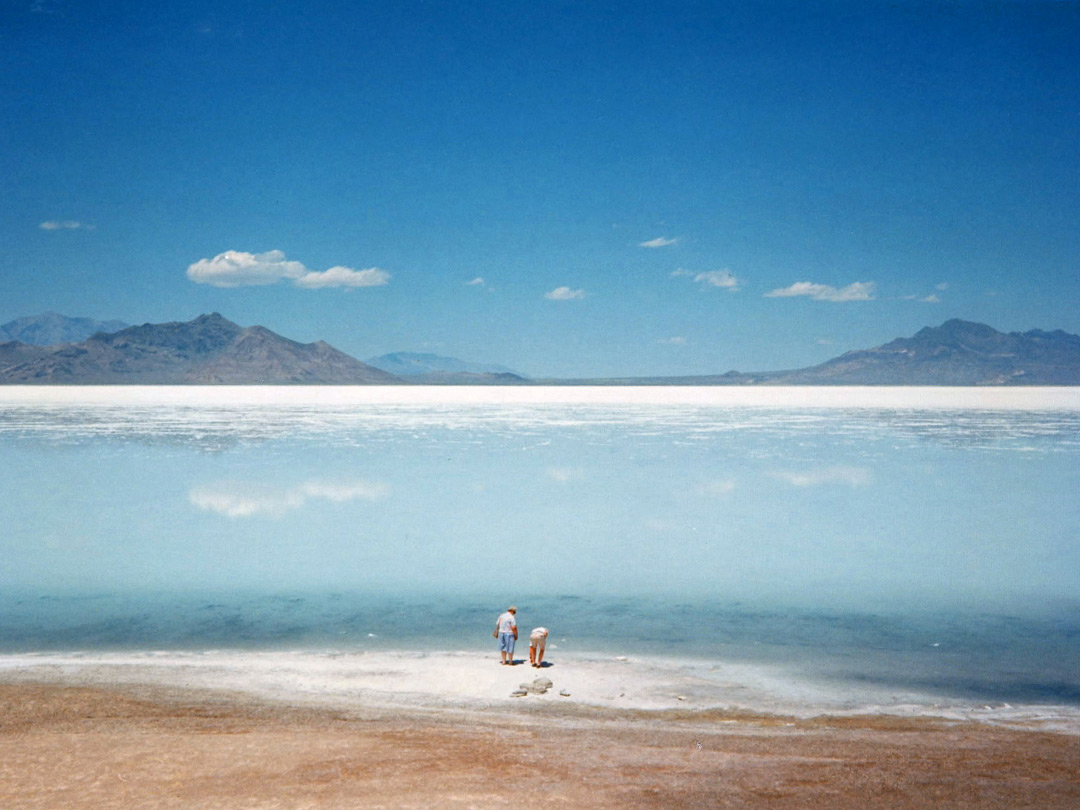
The last person on earth finally listen to this record, I'm absolutely enthralled with how HUGE some of the tracks sound. Their big single "The Funeral." showed what the troupe of equines were capable of, but this track just destroys. To me, "The Great Salt Lake" isn't really as reminiscent of Neil Young as it it is of big open spaces and hopeful imperialism, which are essentially two things the United States has come to mean to me after spending these months abroad. Standing mouth agape at the Great Salt Lake, or maybe the Grand Canyon, this isn't an inherently American dream. I've met Scottish folks who long for such small feelings, but they lament that its too far away. Hell, it's too far for me. I've barely been west of the Mississippi.

The "hopeful imperialism" isn't as creepy as it sounds, I mean that. I haven't gone all manifest destiny in my time away. It's a simple idea inherent in our upbringing that urges us to take something and make it better than we found it. It has been disastrous as a military and political strategy, but I'm not really qualified to speak about those ideas, so I won't.

What I'm trying to say is this: a crucial pillar of the "American Dream" is that you can and should take something and make it your own and make it better. That makes it all the more brilliant when you hear a line like, "we'll be the next Omaha." This can ONLY be American, and damnit, if that doesn't make you a bit proud as an American, run along to Canada.

5. "You Can't Hurry Love" - Forests (self-circulating demo track)


"Glorious," my friend Will summed up this latest effort from New Jersey's Forests. Forests represent a less heard-of manifestation of the American Dream making its way across the country as we speak. There are kids in their rooms with their laptops, staying up all night reading Wikipedia, posting to message boards about music no one gives a fuck about, all the while crafting these little electronic bursts of genius with Fruity Loops, Audacity, Cool Edit, or maybe the occasional pirated copy of Reason or Recycle. The simplicity of home recording and digital composition is the best things to happen for the youth of America since drugs. With only the most remote hope of any commercial viability, these producers must be making music because there's a pure and simple desire to create something out of nothing, eking a voice out of silence. Nothing short of "glorious," indeed.

9.18.2006

Contemplating Skylarking


In mid-June, I began my final twelve hour trek home to Michigan from New Hampshire, my heart heaving heavily each time the thought occurred to me: “I’m finished with college.” As I pulled onto to Interstate 91, the finality was crushing, nearly as crushing as the meeting I had just hastily departed. I had requested a former professor to write a letter of recommendation for my graduate school applications, and sat in horror as she explained why she would not do so. I’m pretty sure I even heard some crabby old voice cackle, “Welcome to the real world!” as I climbed in my car and left campus for good.

Though my heart turned to sand in those painful moments of explanation, it was only minutes later that I found solace in the road as it was, if nothing else, a twelve hour diversion from thinking about the future. Indeed, it was a time to reflect on the past and present. My thoughts of the past turned to my commencement exercises, only a few days old and still green in my memory. And the present, well, that was an open road through Vermont, Massachusetts, New York, and Canada. As I pondered that final ceremony and this twelve hour road trip from college to real life, existence revealed itself as a set of events; cyclical series of transitions, rituals, and moments. We remember the signposts and hang onto all the tiny details we can along the way, but most of our history is the between, forever lost to the gray vagueness of man’s limited recollection. Reflections on memory are always dear to the heart in transition, so it was no surprise to when I turned once again to the album that brought me to these cyclical ideas of life, XTC’s masterpiece Skylarking.

Skylarking was released in the fall of 1986 after a quarrelsome recording session with producer Todd Rundgren at his Woodstock, New York Utopia Sounds Studio. Andy Partridge, the more prolific half XTC’s songwriting duo, had various problems with Rundgren’s production techniques and general overbearing personality throughout the sessions. Rundgren left Partridge with a bitter taste in his mouth, and in post-session interviews he frequently revealed his displeasure with the way the sessions turned out. Colin Moulding, the other half of XTC’s songwriting team, put it rather bluntly in a 1989 WBRU interview, “Todd likes to do things the Todd way…and if you don’t like it, then the sparks are gonna fly.”1

Rundgren’s overbearing personality was well-intentioned as his contribution to the album provided a theoretical framework for which the songs could exist. Rundgren encouraged the arrangement of the album into a tightly sequenced tour de force, resulting in the most coherent and well-constructed album the boys from Swindon ever made. His vision for Skylarking harnessed the band’s growing studio ambitions after abandoning touring in 1982. English Settlement (1982), Mummer (1983), and The Big Express (1984) saw the emergence of the band’s more complex studio stylings, washing away almost all of the frenetic energy and punk rock flare of their earliest efforts. Rundgren’s efforts to construct their potential into a landmark album resulted in Skylarking, a song-cycle encapsulating an entire summer’s day in fifty minutes. Even Partridge later conceded that Rundgren “squeezed the XTC clay into its most complete, connected, and cyclical record ever...A summer's day cooked into one cake.”

So perhaps the weather and season were just perfect for me to stumble across this gem during the early morning hours of a 2000 summer night. It was truly love at first listen as I downloaded three random songs off KaZaA or some other terrible Adware-riddled, computer-eating client during the Great Napster Succession Race that dominated my late high school internet years. From these three tracks, I just knew I had stumbled across a special album and a special band.

I purchased Skylarking only a few days later on cassette, finding it used for seventy-five cents among dirty copies of Journey’s Greatest Hits, a “Bedtime with Beethoven” sleeping music collection, and various Tom Cochrane singles in the cassette tape graveyard at my local record store. I had been collecting tapes at the exact time most stores were selling all of their stock off at dirt cheap prices. My car’s old tape deck stereo was rewarded for its struggle against CDs and the general abomination that was Detroit commercial radio at the time with the Smiths’ Louder than Bombs, the Flaming Lips’ Transmissions from the Satellite Heart, and the Sex Pistols’ God Save the Queen among others. However, none held indefinite reign over my car stereo like Skylarking.

I must have heard every song at least a hundred times over that summer. The cyclical nature of the album made even more apparent by my deck’s auto-reverse feature. The album simply never left my deck that summer, endlessly flipping itself and starting again, over and over.

Despite countless repeated listen sessions and present-day back-of-my-hand familiarity, Skylarking still entrances me. Though most artists and albums create an ambiguity about their meaning and concept prompting listener interpretation, the well-known explanation and semi-intention of Skylarking does not cheapen its value. In fact, if nothing else, the history provides an established dialogue that I myself can now easily enter despite the generation gap between myself and the album.

I was born not much more than a year before Skylarking was released, and throughout the fourteen years the album existed outside of my consciousness, much in popular music and the very basic way we perceive and interpret albums had changed. The fragmentation of albums into songs so long observed in commercial singles and radio became an album-wide phenomenon with the emergence of compact discs, allowing the user to effortlessly skip between tracks as if the other songs were not there. As I approached Skylarking, I used perhaps the most disjointed way of digesting an album, random mp3s obtained through file-sharing collections. I was given three random songs to understand an album, to understand the larger picture.

As McLuhan meant to say, “The medium is the message,” and the way my generation has come to experience albums cannot be overlooked. New processes and media force us to reinterpret old material in a new frame of reference. Skylarking was written as a complete album, to most likely be consumed as a vinyl record or cassette tape. The digital age challenged this fact, urging the listener to reconsider the album as a collection of songs, perhaps empowering the form through a new sense of fragmented time and phase.

Though the majesty of Skylarking can be obscured outside of the song-cycle vision created by Rundgren, the glory of the songs as they stand-alone is a testament to the craft and skill of Andy Partridge and Colin Moulding. A digital reading of Skylarking makes a bold statement on the fragmentation of time in the album’s cycle. Though the album begins with crickets and birds awakening and closes with a twilight bonfire, the songs of the summer’s day traverse an entire life, from the joys of the juvenile to the mundane of the mid-life even onward to death. Listened to in sequence, the picture is complete and linear. Listened to at random, the album creates a mosaic of universal life experiences, conjuring memories of our own life along the way.

The magic of Sylarking lies in this fractured state and the way technology allows us to revisit and reimagine. My favorite songs have changed over the years as I have grown older, and certain lines resonate more with me than before. The songs that have faded from favor don’t disappear; instead, they marinate in the fondness of rose-tinted recollection, conjuring memories of what once was out of the gray expanse of time. “Grass” simply and elegantly brings forth childhood playtimes, some innocent, some not so innocent, all previously forgotten, now uncovered. “That’s Really Super, Supergirl” opened the wounds of those intentionally ignored break-ups and unrequited feelings that still find a way to smart after all these years. As I move through my life, so the album moves with me, still always anchoring me to my past.

Perhaps not unlike the comic medium XTC continuously reference in their songs (Skylarking’s Supergirl, Black Sea’s “Sgt. Rock (Is Going to Help Me),” the Dukes of Stratosphere’s “Brainiac’s Daughter,” etc.), Skylarking’s new power lies in the fragmented, simultaneity of time within its cycle. In comics, time exists concurrently in all panels, and all panels exist on every page at all time. We can flip pages back to relive a moment we just experienced, or flip forward to see where frames will take us next. Comics create their own temporal universe; one not necessarily grounded in chronological linearity, yet instead in the reader’s own logic, no mater how alien it might be to another.

So succeeds Skylarking. While my favorite moments change as I grow older, they do not follow the linearity of the album’s cycle as Rundgren sequenced it. I can appreciate his effort; however, my point of view demands a different sequence each time I listen. The somber reflections of Colin Moulding’s “Dying” reinforced the importance of small details in creating a foundation for my own memories as I drove from New Hampshire to Michigan. Moulding’s observations of wedding days in “Big Day” rang just as true for me on graduation day, as I wondered if I could maintain the true passion in my heart against the oncoming financial struggle of the real world. “Will your love have the fire and glow, like on the big day?” Then these thoughts lead me to “Earn Enough for Us,” where I become completely certain I’ll never earn enough money to support “us,” let alone myself. All out of order on the album, all in the order of my own life experience.

The timelessness of Skylarking comes through in these interpretations, not only for their universality temporally, but also in the general human experience. The album shows a thorough understanding of time and modern life as a collection of events, moments, and situations that we can all relate to. Adolescence heartaches, jobs, weddings, affairs, mid-life crises, and death are all events that will become a part of our life. Yet every visit to the album is a celebration of all of them, both mundane and extraordinary. Each moment gets the same treatment.

These moments become Skylarking, but then, what does “skylarking” even mean? Passing on the rather obvious working title “Day Passes,” XTC chose a word meaning to frolic or run up and down the rigging of a ship in sport. For an album of such ambitious goals, the title comes as a bit of playful irony and cynicism which had always been inherent in XTC’s works, right down to their band name’s play on drugs and letters. Maybe in tune with their well-practiced cynicism, it was a comment on the mundane system of events our lives all seem to take on, independent of geography, culture, or time period. Perhaps we all are just frolicking on the same rigging of a ship in sport, and each life is as inconsequential as the next when you view the larger mosaic of existence. Myself, I prefer to consider Skylarking a celebration of the mundane, romanticizing life’s processes and events in song for what they are: signposts and details we mold into and hold onto as memories, like great fishing poles into the expansive grayness of our tired minds.